Are you ready to elevate your knitting skills and create a stunning, seamless cowl? This tutorial will guide you through the surprisingly simple process of knitting an invisible join in the round and incorporating the beautiful bamboo stitch, resulting in a gorgeous, professional-looking finished piece. Forget about those frustrating seams and enjoy the elegance of a truly continuous fabric; this technique is perfect for beginners and experienced knitters alike, offering a satisfying and rewarding project. The captivating texture of the bamboo stitch adds a touch of sophistication, making this cowl a perfect accessory for any season.
This tutorial focuses on making the process of knitting this cowl as straightforward as possible. We'll break down each step, from casting on to binding off, ensuring you confidently create a beautiful, seamless cowl using the invisible join and the delightful bamboo stitch. Let’s get started with the step-by-step instructions!
Preparation and Safety Guidelines
- US8 (5mm) needles (16in or 24in circumference)
- Worsted weight yarn (approx. 355 yards/325m for size A, 285 yards/261m for size B)
- Use a yarn weight and needle size appropriate for the pattern. Using the wrong size can lead to a loose or tight fabric that makes the invisible join difficult and may affect the overall look of your cowl.
- Practice the invisible join on a scrap of yarn before working it into your project. This will help you get comfortable with the technique and avoid mistakes on your finished piece.
- Ensure your yarn tails are securely woven in after completing the invisible join. Loose ends can unravel your work and compromise the durability of your cowl.
Step-by-Step Instructions
Casting On
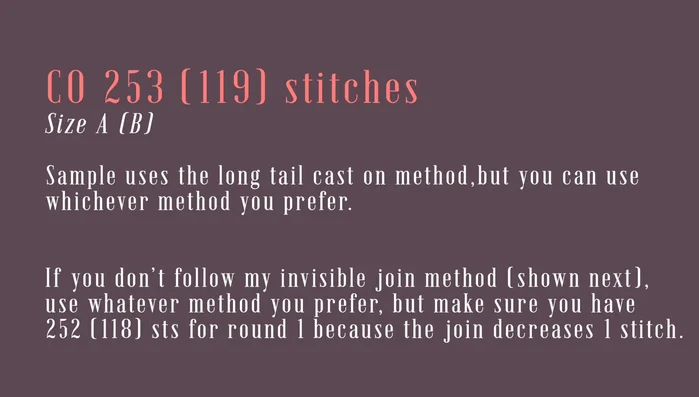
- Cast on 253 stitches (size A) or 119 stitches (size B). The sample uses the longtail cast-on method, but any method works.

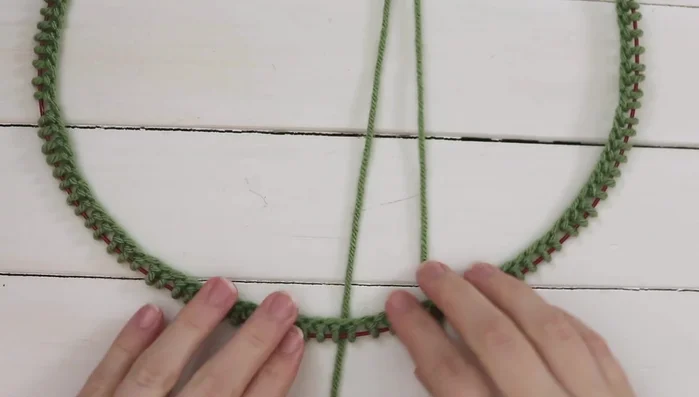
Casting On Invisible Join
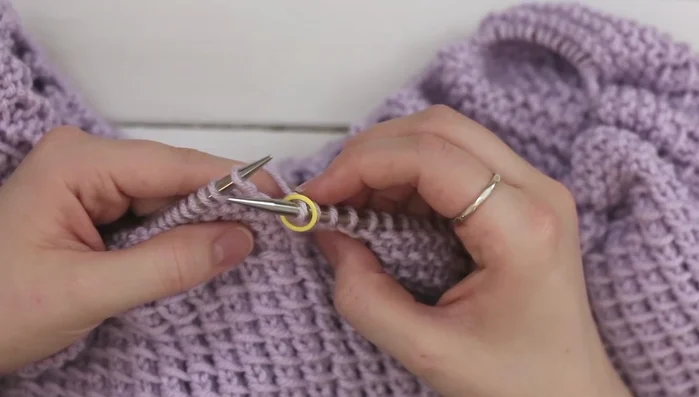
- Insert the right needle into the first stitch on the left needle from right to left (as if to purl), slip the stitch to the right needle. Knit the next stitch on the right needle and slip it over the first stitch. Repeat this process to join the round.
Invisible Join Initial Garter Edging
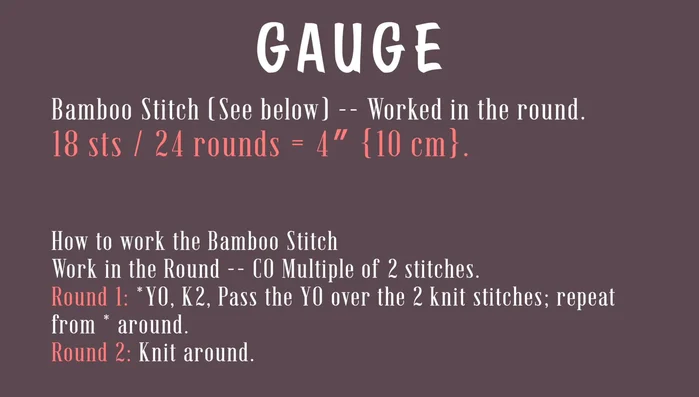
- Yarn over, knit 2, pass yarn over over the knit 2 and off the needle. Repeat around.
- Knit all stitches around.
- Slip the first stitch, knit the rest of the round. Repeat Rounds 2 and 3 a total of 8 times for the garter edging.
Initial Garter Edging Main Stitch Pattern
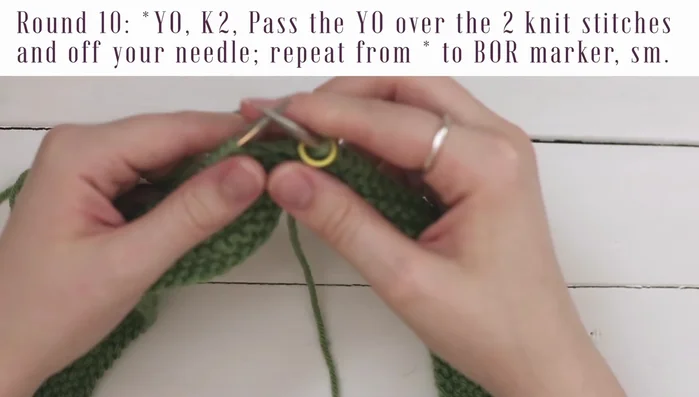
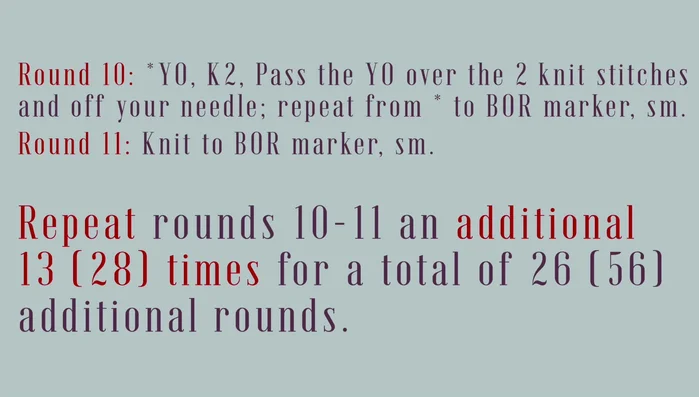
- Begin stitch pattern. Yarn over, knit 2, pass yarn over over the knit 2 and off the needle. Repeat.
- Knit to the beginning of round marker, slip marker. Repeat Rounds 10 and 11 an additional 13 times (size A) or 28 times (size B).
Main Stitch Pattern Final Garter Edging
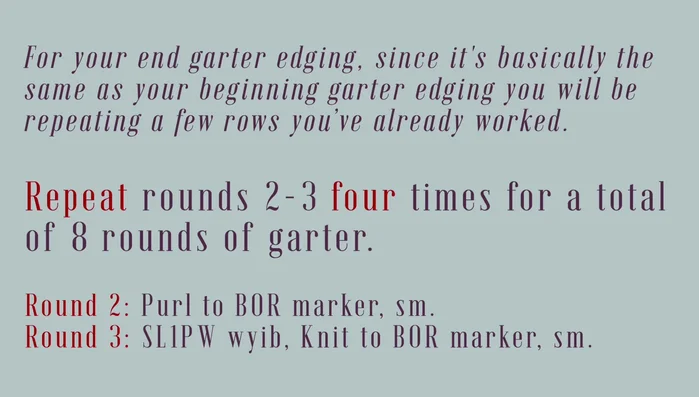
- Repeat Rounds 2 and 3 four times for a total of eight rounds.
Final Garter Edging Binding Off
- Pearl 2 stitches, pull the second stitch over the first and off the needle. Repeat until one stitch remains.
Binding Off Finishing Touches
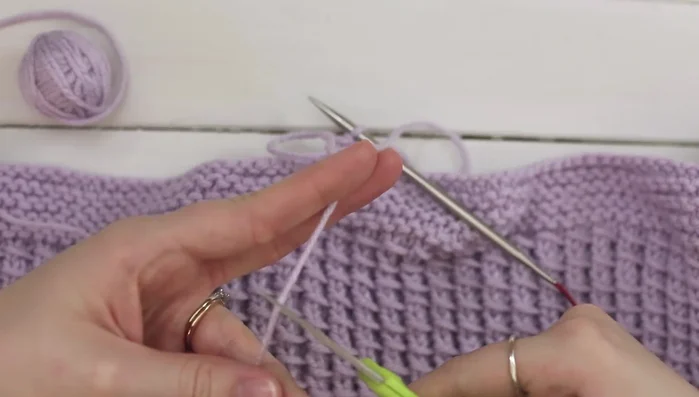
- Weave in ends. Add a 'fake' stitch to close the gap in the bind off by threading the tail yarn through a yarn needle and going underneath both legs of the bind off V-shape.
Finishing Touches


Read more: Knitting a Reversible Basketweave Blanket: A Customizable Guide
Tips
- Always swatch to ensure you meet gauge.
- When choosing yarn, aim for something with similar yardage/meterage to weight (200g) as the sample (355 yards/325m).
- To work a neat bamboo stitch, slip the first stitch of each knit round to even out the purl ridges.
- When weaving in ends, use a diagonal approach to secure them effectively, and don't pull too tightly.